
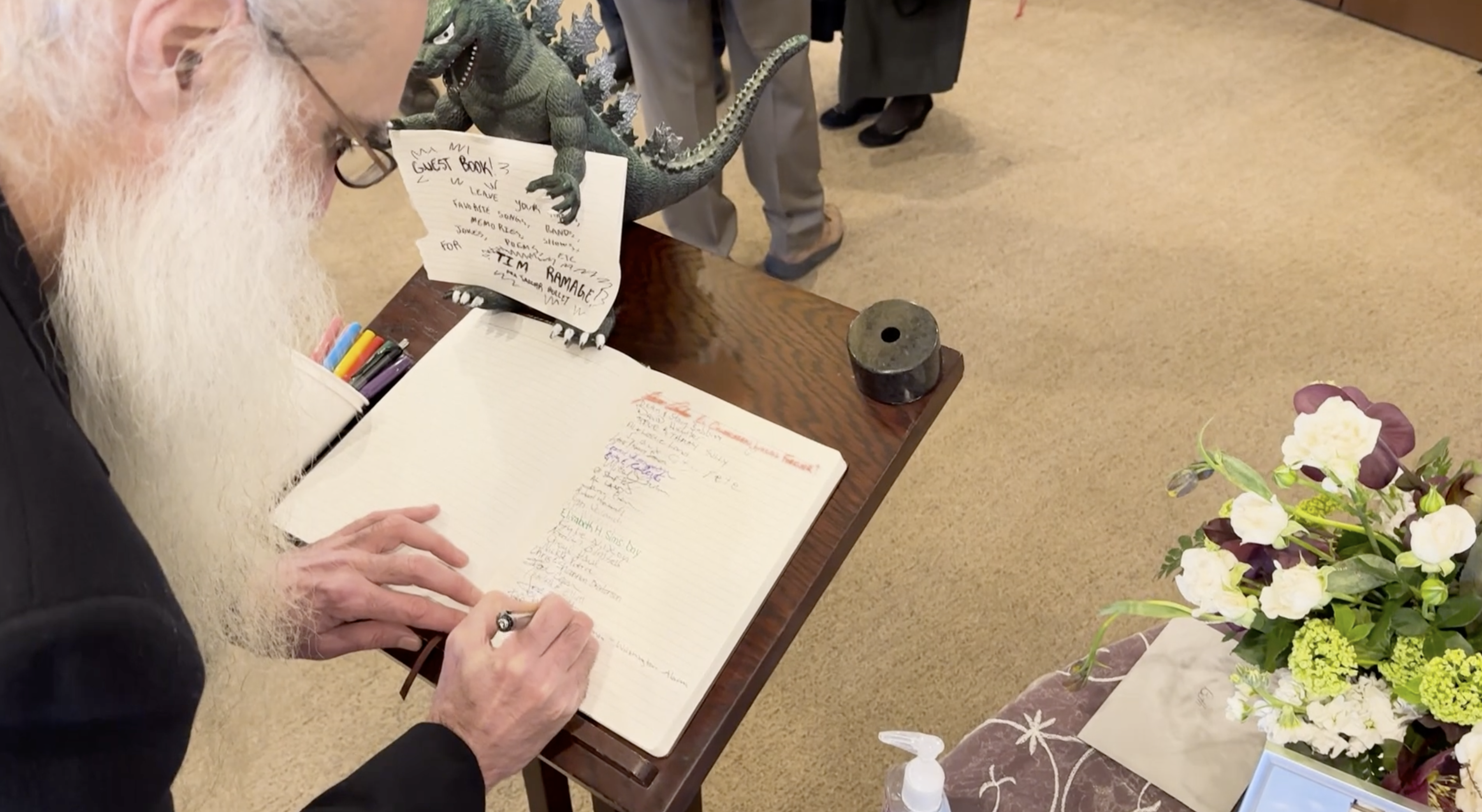
Why on earth would you film a funeral?
I didn’t invent the idea of filming memorial ceremonies. It’s common for public figures, celebrities, and members of the military. The pandemic introduced a whole new need to participate remotely, and that need persists today.
We document birthdays, graduations, weddings—moments of joy and transition. Yet memorials, the final celebration of a life, are rarely recorded.
Why is that?
It’s certainly the last thing you’ll want to think about when struggling with a recent loss. Then there’s the stigma. The idea of posting the event to social media — like some fancy meal or a wild concert — rightly turns most people off. It’s no wonder we have little desire to record an event whose circumstances none of us welcome.
The Last Milestone
Yet the memorial is our last big milestone. Friends, family, and loved ones gather from near and far to celebrate us.
The “fake funeral” trope, used so often in movies and TV, proves its value. The falsely departed hear those beautiful words otherwise left unsaid by those nearest and dearest. These memories deserve to be recorded as a testament to who we are.
This is where documentary storytelling shines.
A Documentary About Your Wonderful Person
A true documentary starts with understanding the person. I say this a lot: every project at Wildflower begins with a conversation. People want to know your wonderful person beyond their name and resume highlights. They want to hear about the impact your wonderful person had and the relationships that shaped them.
Wildflower takes the time to learn who will be speaking, how they knew your wonderful person, and what memories they’ll bring forward. This is why the final film feels so personal. It captures a person’s essence through the voices of those who loved them.
Yet no story unfolds exactly as planned. Memorials reveal moments you don’t expect — spontaneous laughter, quiet reflection, stories that surface only when people come together in remembrance. A Celebration Documentary preserves these fleeting connections. Whether through moving (or hilarious) speeches or wistful reflections in the Remembrance Chair, these films ensure voices aren’t lost.
A Film For Times Ahead
These are the moments you’ll want preserved. As documentary filmmakers, our cameras stay on the story, not the audience.
Emotions feel overwhelming in the days and weeks following a loss. Months, even years later, hearing your wonderful person’s name spoken is a gift. Seeing faces gathered in love brings a comfort that defies loss.
Reliving moments of remembrance becomes irreplaceable — something many don’t realize they want until time reveals its true significance.
The film becomes a lasting heirloom. People return to it — not for grief, but for the joy their wonderful person brought to the world.
So, Why Film Memorials?
I believe storytelling connects us across time. Preserving voices, gestures, and moments with care ensures that love resonates beyond a single day.
This is the power of documentary film: tributes that serve future generations by preserving wisdom, relationships, and perspectives. That should be available to everyone, especially for your wonderful person.
That belief motivated me to suggest filming my wonderful friend Tim’s memorial. The decision felt strange at first. But that choice transformed absence into presence. The stories, the connections, the shared love — captured forever — turned a moment of loss into a celebration.
And that is something I will always choose to film.

Journal Photos by Stuart DeSpain, Wildflower Video
Leave a Reply